
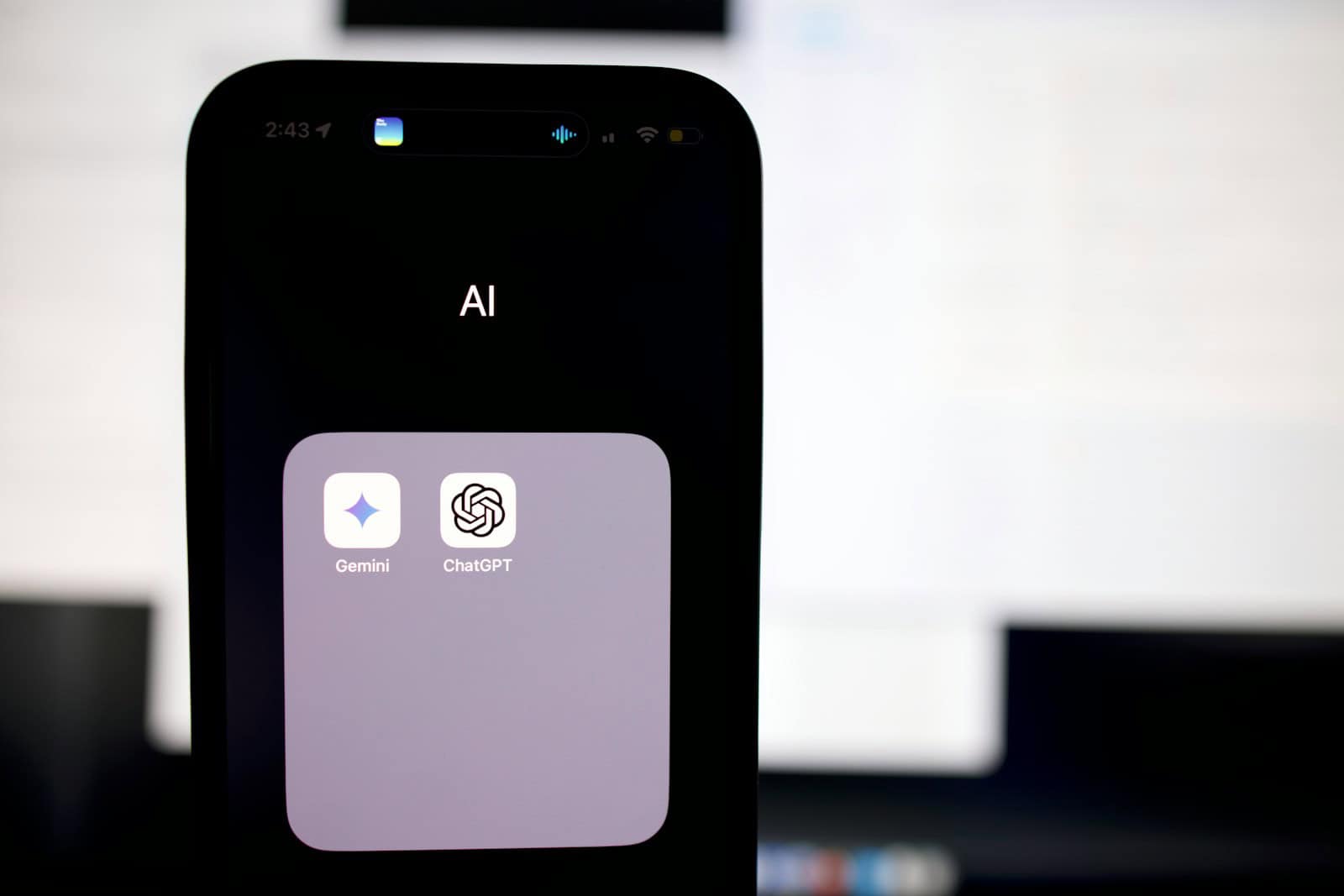
Artificial intelligence chatbots have rapidly evolved into powerful tools for productivity, creativity, and research. Two of the most talked‑about AI platforms today are Google Gemini and ChatGPT. Both are built on large language models and aim to help users write, code, research, and solve problems—but they take different approaches and excel in different areas.
In this article, we’ll compare Google Gemini and ChatGPT across features, performance, integrations, and ideal use cases, with a clear comparison table to help you decide which one suits your needs.
Overview of Google Gemini
Google Gemini is Google’s advanced AI model family, designed to work deeply within the Google ecosystem. It powers experiences across Google Search, Gmail, Docs, Sheets, and other Workspace tools. Gemini focuses heavily on real‑time information, multimodal understanding (text, images, code, and more), and tight integration with Google services.
Key strengths:
- Strong real‑time information access via Google Search
- Deep integration with Google Workspace
- Advanced multimodal capabilities
Overview of ChatGPT
ChatGPT, developed by OpenAI, is one of the most widely used AI assistants globally. It is known for its strong conversational abilities, creative writing, coding support, and adaptability across many tasks. ChatGPT is available via web, mobile apps, and API access, making it popular with individuals, developers, and businesses.
Key strengths:
- Natural, human‑like conversation
- Excellent creative and technical writing
- Strong coding and reasoning capabilities
Feature‑by‑Feature Comparison
Writing & Creativity
ChatGPT generally excels in long‑form writing, storytelling, and tone control. Gemini performs well for concise, factual writing, especially when tied to current information.
Research & Accuracy
Gemini benefits from Google’s search infrastructure, making it strong for up‑to‑date facts. ChatGPT focuses more on reasoning, synthesis, and structured explanations, though real‑time browsing depends on the plan and setup.
Coding & Technical Tasks
Both models can write, debug, and explain code. ChatGPT is often preferred for complex programming logic and step‑by‑step explanations, while Gemini integrates well with Google’s developer tools.
Integrations & Ecosystem
Gemini’s biggest advantage is native integration with Gmail, Docs, Sheets, and Search. ChatGPT shines with API access, third‑party plugins, and flexibility across platforms.
Google Gemini vs ChatGPT: Comparison Table
| Feature | Google Gemini | ChatGPT |
|---|---|---|
| Developer | OpenAI | |
| Primary Strength | Real‑time info & Google integration | Conversational AI & creativity |
| Writing Quality | Clear, factual, concise | Creative, natural, adaptable |
| Coding Support | Strong, especially with Google tools | Excellent for complex logic & debugging |
| Real‑Time Data | Native via Google Search | Available depending on plan/tools |
| Multimodal Input | Text, images, code | Text, images, code |
| Integrations | Gmail, Docs, Sheets, Search | APIs, apps, third‑party tools |
| Ease of Use | Seamless for Google users | Simple, intuitive for all users |
| Best For | Google Workspace users, research | Writers, developers, general users |
Which One Should You Choose?
Choose Google Gemini if:
- You rely heavily on Google Workspace
- You want fast, up‑to‑date information
- You prefer AI built directly into search and productivity tools
Choose ChatGPT if:
- You need high‑quality writing or creative content
- You do programming, debugging, or technical explanations
- You want flexibility, APIs, and strong conversational flow
Final Verdict
Both Google Gemini and ChatGPT are powerful AI assistants, and neither is objectively “better” in all cases. Gemini excels in real‑time knowledge and Google ecosystem integration, while ChatGPT stands out for creativity, reasoning, and versatility.
Ultimately, the best choice depends on how you work—and many users may find value in using both for different tasks.